NEXUS
A ecology system that listens, responds, and grows with you.
This project creates an urban ecological hub that transforms everyday city spaces into living restorative system where people and nature coexist by merging wellbeing, ecology, and play.
Through interactive installations, environmental feedback, and seasonal community rituals, the hub invites people to see, feel, and contribute to urban regeneration, fostering collective belonging, sensory awareness, and a renewed rhythm of coexistence between humans and nature.

Pain Points
Demand for
Restorative Nature
Demand for
Communal Immersion
Demand for
Healthy Environments
As urbanization accelerates (68% urban by 2050), daily life increasingly limits routine contact with nature—contributing to stress, inactivity (~31% of adults), and declining wellbeing.
Loneliness is a growing public-health risk (~1 in 6 people globally), with Gen Z reporting persistently strained mental wellbeing. Yet cities lack accessible, low-pressure social spaces that support sensory comfort, emotional regulation, and everyday connection.
The wellness real estate market is expected to grow from a $398bn value in 2022 to $887.5bn in 2027 as more consumers seek out homes, offices and spaces that align with their health and wellness needs. 80-90% of health outcomes are linked to where and how we live, but healthy environments are still a privilege reserved for a select few.

I wish nature were integrated into daily life, not treated as an occasional escape.
I wish wellness spaces enabled meaningful communal connection, not just individual self-care.
Opportunities
I wish self-care felt playful and motivating, not effortful or clinical.
I wish wellbeing, sustainability, and living systems were designed as one integrated whole.
Jada Kim
The Sensory Seeker
User Persona
Age: 22
Gender: Female
Location: Los Angeles, CA
Occupation: Visual culture student + part-time content assistant
Status: Single, lives with roommates
Income: ~$16,000/year
Values:
-
Emotional authenticity, aesthetic comfort, sensory regulation
Interests:
-
Aromatherapy, quiet cafés, ambient playlists, journaling
-
Nature walks in urban parks, mood lighting, gentle yoga
-
TikToks on “cozycore” and seasonal rituals
Pain Points:
-
Mental fatigue from school, screens, and overstimulation
-
Traditional wellness feels too elite or intense
Motivations:
-
Wants to feel regulated and at ease
-
Seeks emotional clarity through small rituals
-
Occasional, gentle nature-based escapes


Eason Marquez
The Regenerative Retreater
Age: 45
Gender: Male
Location: Boulder, CO
Occupation: Marketing exec
Status: Divorced, raising a teenage son
Income: ~$110,000/year
Values:
-
Long-term wellbeing, blue zone lifestyles, nature-first architecture
Interests:
-
Foraging, fermentation, forest therapy
-
Regenerative food systems, longevity science, seasonal rituals
-
Edible landscaping and bio-regional retreats
Pain Points:
-
Do not have enough time for remote and long retreat
-
Urban wellness doesn’t feel integrated or long-lasting
Motivations:
-
Wants to transition into a life that is rooted, intentional, and regenerative
-
Craves meaningful learning and silence
-
Hopes to raise his son with nature-based intelligence


Ecological Interconnection
Let people sense how their small actions connect to the city’s living systems—air, water, and species.
Brand Positioning
Target Customers
For city dwellers who feel disconnected from nature, community, and themselves—from those seeking calm and comfort to those seeking deeper meaning.
How might we transform urban public spaces into restorative, nature-connected hubs that nurture wellbeing for city dwellers through collective and sensory engagement?
Transforms invisible ecological processes into multi-sensory experiences of light, sound, scent, and touch.
Sensory Immersion
Market Definition
A modular ecological hub that transforms public spaces into living systems—supporting urban restoration, shared care, and learning while connecting personal wellbeing with planetary health.
Collective Belonging
Makes every visitor’s contribution visible, so individuals feel part of a shared and growing ecosystem.
Brand Promise
We create immersive nature experiences that help people relax, participate, and belong—turning everyday city moments into simple, multi-sensory rituals that make ecological change visible and tangible.
Regenerative Intelligence
Uses responsive technology to learn from human and environmental behavior, keeping the hub alive and adaptive.
Turns simple, everyday acts into small moments of mindfulness and care.
Accessible Rituals
Reason to Believe
In a time of digital fatigue, loneliness, and environmental anxiety, our hub reconnects people and nature through creative interactions— making sustainability visible, felt, and cared for, while building a community that supports both people and the city.
Narrative Resilience
Tells evolving stories of season, time, and change, helps users witness and remember nature’s ongoing cycles.

People first discover the Hub through school partnerships, city events, or short videos. The Hub is introduced as a living ecological system that makes plant–pollinator communication visible and felt.
People may encounter the Hub while moving through the city or choose to engage more intentionally by exploring its digital platform.
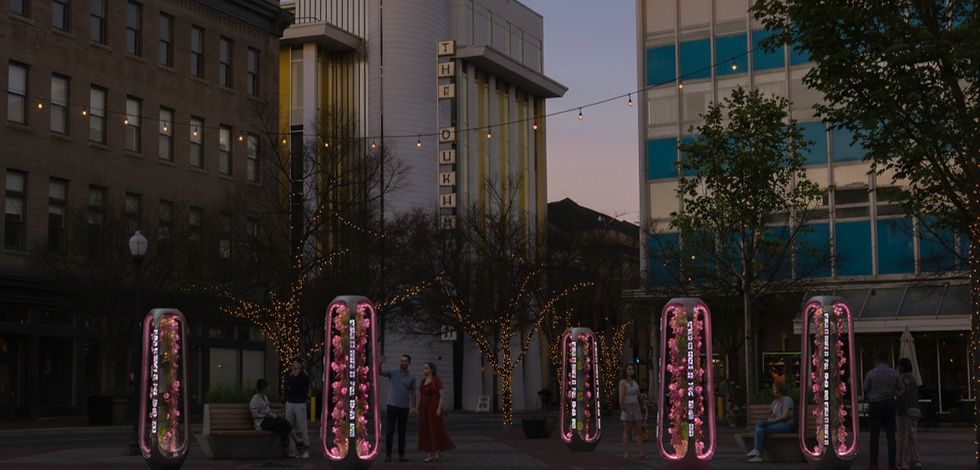
Upon arrival, visitors immediately sense a shift in atmosphere as light, sound, and scent subtly respond to real-time ecological activity.
Over repeated visits, the Hub evolves with daily rhythms and seasonal cycles, allowing people to experience growth, pollination, rest, and resilience as an ongoing, shared process.
User Journey Map
The Hub hosts simple seasonal programs such as planting days, biodiversity observations, or nighttime bloom events. These shared moments turn individual visits into collective rituals, strengthening community bonds and ecological awareness without feeling formal or instructional.
As visitors return, they see their contributions reflected in city-wide ecological networks. The Hub becomes a place they care for and advocate for, encouraging others to visit and helping expand the network of ecological hubs across the city.
Moodboard & Ideation

PATTERN
CO-EXISTENCE
STRUCTURAL

Light Pattern(Daytime)
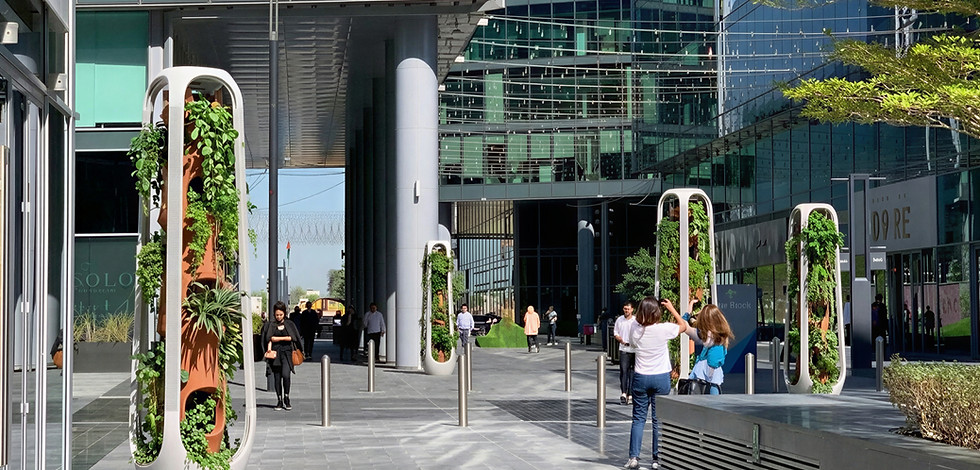
Uses lighted dots and generative patterns to communicate ecological states when people approach. Proximity sensors trigger clusters of illuminated dots.
Glowing Plant (Nighttime)
Reveals an unseen nocturnal dimension of plants by illuminating them in wavelengths perceptible to insects and humans.
Solar Energy Module
Provides off-grid renewable energy to power lighting, sensing, audio, and communication systems.
AI Camera System for Pollinator Detection
Detects and classifies pollinator presence to reveal plant–pollinator relationships in real time.
Sound System
Translates ecological data into subtle, layered soundscapes.
Olfactory System
Translates floral chemical signals into human-perceptible ecological cues through controlled, directional scent pulses, making smell a medium for understanding plant–pollinator relationships.
Seasonal Ecological Regulation System
The system integrates seasonal planting, water circulation, and microclimate regulation into a continuously operating ecological unit, coordinating water, light, temperature, and phenological rhythms. Pollinator-friendly plantings are supported by rainwater harvesting and drip irrigation to regulate soil moisture and flowering across seasons, while shading, permeable surfaces, and wind-guiding structures modulate local microclimates to mitigate heat-island effects and sustain biological activity.
Detail Features
User Interface Design

Daytime
Nighttime